How to Run Sales Coaching That Sticks (2026)
Most sales coaching passes on information and changes nothing. Here's the method a leader uses to run it on one skill at a time and check that it actually stuck.
Carla Macciocu
Sellcrafter
“We run sales coaching every month.” The session happened. Everyone showed up, everyone nodded, everyone agreed it was useful.
Two weeks later the calls sound exactly like they did before.
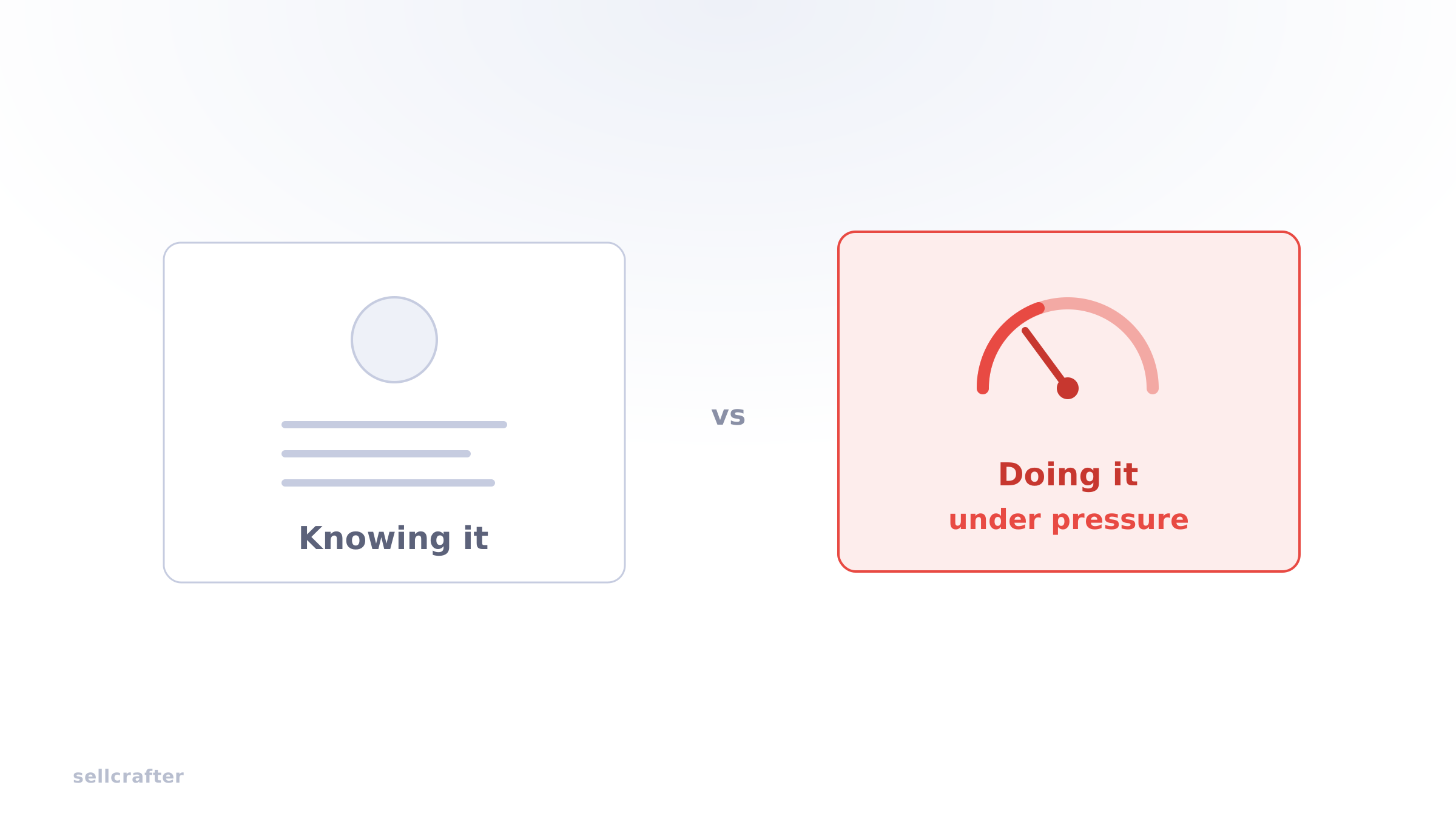
Most coaching is built to pass on information, and information on its own does not change how people sell. Knowing how a good discovery call works and running one well under pressure are two different skills, and a slide deck closes that gap for nobody.
This is the method for running a coaching session on any sales skill so the behavior shows up on the next call, plus how to check whether it actually stuck.
What sales coaching actually is
Sales coaching is a repeatable system for changing one observable selling behavior and reinforcing it on real calls until it becomes habit.
It is not a training day, not an annual kickoff, and not a deck sent round the team. Training moves information into people’s heads. Coaching changes what they do on the next call.
The thing that separates the two is reinforcement on real calls, and most programs skip it.
Why coaching fails in real teams
The first failure is building the session as an information transfer. Someone talks for an hour, the team understands every word, and nothing changes, because understanding a skill and performing it are not the same event.
The second is scope. A session called “better sales calls” is too big for anyone to act on Monday morning. If the team cannot name the one thing they are supposed to do differently tomorrow, the session had no target.
The third is the manager who corrects live. The moment you become the person who fixes every call as it happens, your team only improves when you are standing next to them. That is not a coached team, that is a dependency.
The fourth is the missing reinforcement loop. The concept lands in the room and dies there. You can see it: pull the call recordings from the week after any session and listen. If the behavior did not move, the session was theater.
There is also a design failure that sits underneath all of this.
Think back to school. You remember two or three teachers clearly, the ones who made it interesting. Everyone else read through the material and you remember almost nothing.
Adults work the same way. A long, dull session gets sat through, forgotten, and never used. Short and a little entertaining is not a nice-to-have. It decides whether any of the rest works.
The method, in five steps
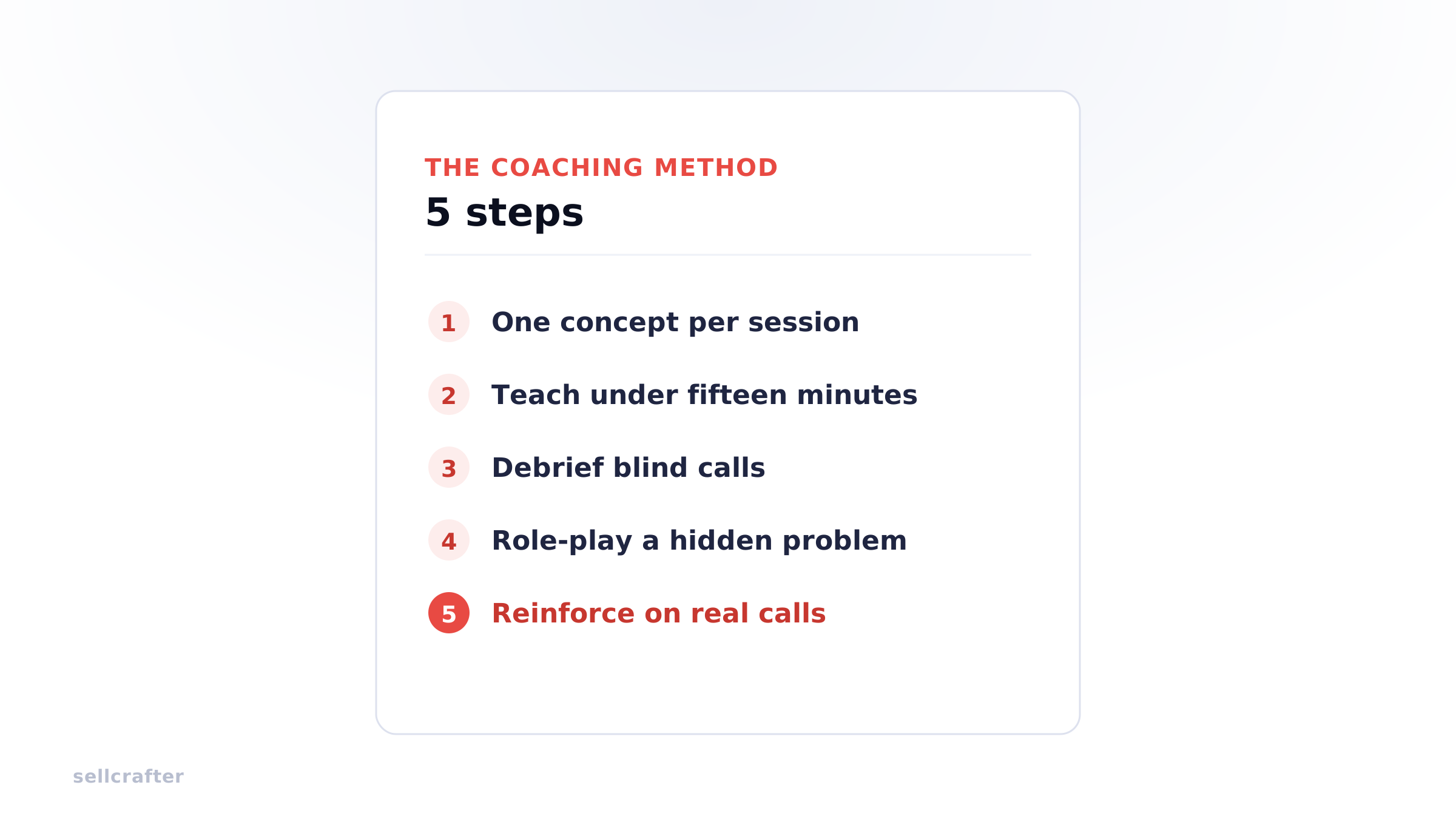
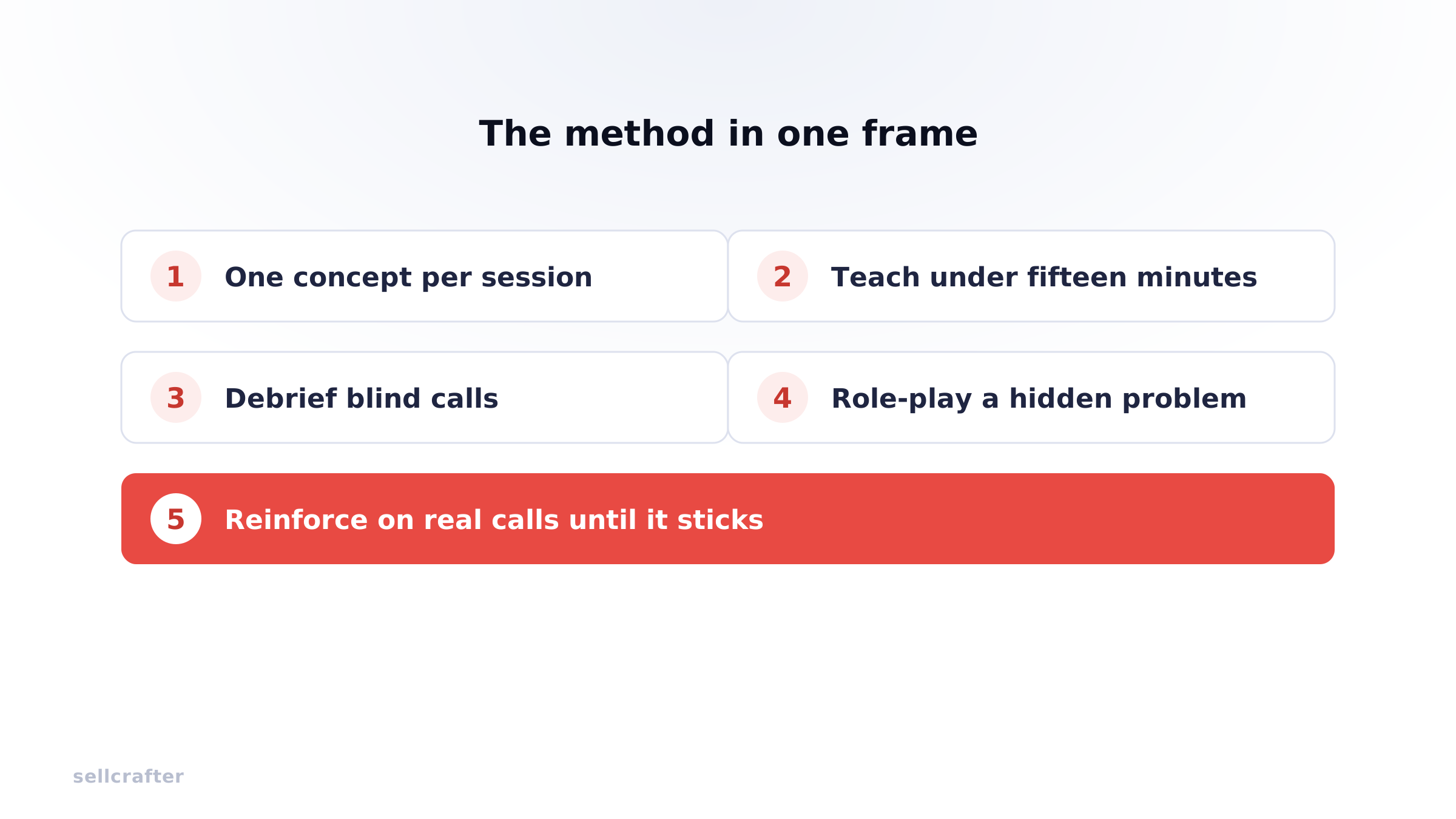
One concept per session. Just one. Pick something specific and observable: active listening, one type of objection, the discovery dig from situation to problem. One concept is small enough that everyone in the room can go and do it the next day.
Keep the teaching under fifteen minutes. That is the maximum, and it is where most managers overspend, because explaining feels like the valuable part.
Explain the concept through an everyday analogy that has nothing to do with sales, because that is what makes it stick. Then bring it straight back with an example from their own product and their kind of client. Close the slides. Everything that matters happens next.
Debrief calls that are not theirs. Before anyone role-plays in front of colleagues, listen to calls with no name attached. Generate a few short rep-and-client exchanges with AI ahead of time and debrief them live.
With no one being judged, the team relaxes, speaks freely, and starts spotting the exact skill you are teaching on their own. By the time you have pulled apart two of these, the room understands the point without a single person having performed yet.
Role-play with a problem hidden inside. Now they practice. Keep each one to three to five minutes, play the client yourself, and hide a small problem in every scenario so the only way to handle it well is to dig for it.
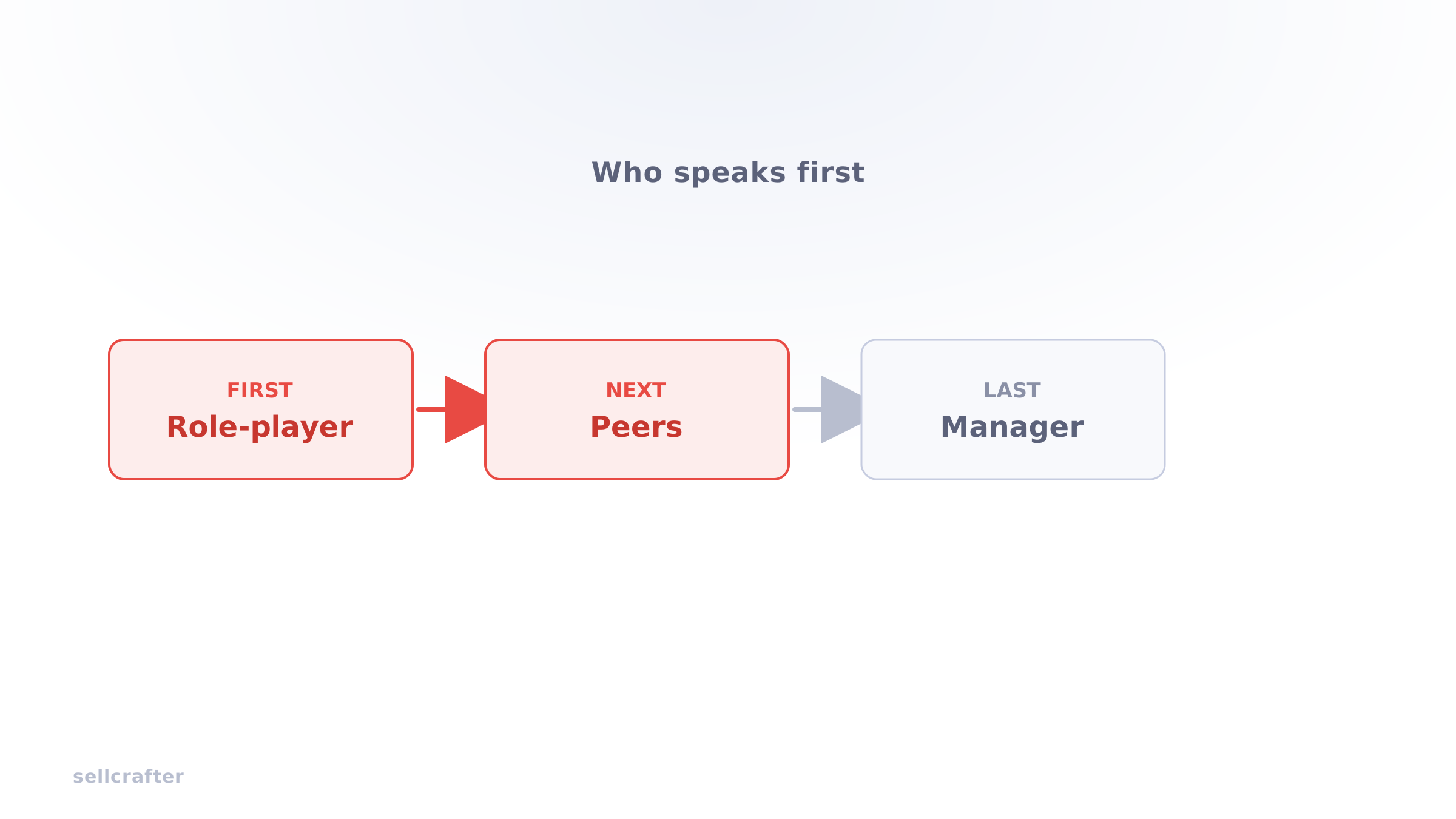
For feedback, the person who did the role-play reacts first, the people who watched speak next, and you go last. Resist correcting the second you spot the mistake. Train the team to diagnose each other and you have built something that keeps working when you are not in the room.
Reinforce on real calls. This step happens after the session, once the team is back on live calls. Listen to those calls and show each person where they applied the concept and where they did not. Point out the next chance they had to ask the question. Keep doing that until the new habit is simply how they sell.
This is the method I run with the SaaS teams I work with. If installing it yourself is not where you want to spend the next quarter, it is the kind of thing I set up and hand off.
How a leader inspects this
This is the section that keeps coaching honest. Run it like a review checklist.
In the following week’s call reviews, look for the coached behavior. If you ran a discovery session, are reps asking the second and third question, or stopping one question too early? The recordings tell you within minutes.
In the session itself, watch who diagnoses. If peers are calling out the misses before you do, the room is learning. If you are doing all the correcting, you are training a dependency.
Check the scope. One concept per session, or has it sprawled back into “better calls”? Check the loop. Is there reinforcement on real calls after the session, or did the concept die in the room?
The red flag to watch for: the same skill gets “trained” every quarter and never changes. That means it was information transfer every time.
And when a skill sticks, write the observable standard for it into the playbook, so the next hire inherits it instead of learning it from scratch.
The one decision
Leaving coaching to ad-hoc manager instinct has a cost you can measure: every rep improves at a different rate, and only when a manager happens to be next to them.
The decision is whether to make coaching a repeatable system, run on one observable skill at a time with a reinforcement loop, or keep running training days that evaporate by the following week.
One concept, a short and entertaining teach, a no-pressure debrief, a role-play with a problem hidden inside, and reinforcement on real calls until it sticks. That is the whole method.
I’m Carla. I build sales enablement systems for B2B SaaS teams from zero and hand them off to your team, coaching programs included. If you want a coaching system your managers actually run, and your managers trained to run it, this is what I do.
FAQ
How long should a coaching session be? The teaching part stays under fifteen minutes and the whole session stays short. Length is what gets it forgotten.
How often should we coach? On a regular cadence, one concept each time. Frequency beats duration.
What is the difference between sales training and sales coaching? Training moves information. Coaching changes behavior on real calls through reinforcement. A team can be trained constantly and coached never.
Do I need a dedicated coach, or can managers run this? A manager can run it, as long as they hold the method: one concept, peers diagnose first, manager goes last, reinforcement afterward.
What should I coach first? The skill breaking the most deals in your call reviews. Diagnose it from recordings before you pick a topic. If you score calls to find what to coach, the priority is obvious.
Written by
Carla Macciocu
Sales enablement consultant working with B2B SaaS teams from Seed to Series C. Runs Pimp My Playbook out of Sellcrafter.