Fractional Sales Enablement: When It Beats a Full-Time Hire (2026)
Fractional sales enablement gets the playbook, onboarding and coaching cadence built in weeks. Here's when it beats a full-time hire, when it doesn't, and how to inspect it.
Carla Macciocu
Sellcrafter
“We’ll hire a Sales Enablement Manager next quarter.” The role has been on the hiring plan for two quarters already.
Meanwhile, every new rep learns to sell by shadowing whoever has a free afternoon, the playbook is a folder of decks from three messaging versions ago, and your forecast depends on which reps happened to have a good month.
The common advice is to wait for the perfect full-time hire and let them build everything. That advice quietly costs you two to three quarters of a sales team improvising.
This article covers what fractional sales enablement actually is, when it beats a full-time hire, when it does not, and how to inspect the engagement so you get a system instead of a stack of slides.
What fractional sales enablement actually is
Fractional sales enablement is a senior enablement operator working for your company part-time or on a fixed engagement, building the systems a full-time Sales Enablement Manager would own: the sales playbook, the onboarding program, the coaching cadence, and the single source of truth your team sells from.
You get the function without the permanent seat.
You will see the same offer under several names. A sales enablement consultant, a freelance sales enablement manager, a sales enablement contractor.
The labels differ, the test is identical: does this person build systems your team runs after they leave, or do they produce deliverables and disappear?
Two things fractional enablement is not. It is not sales training, a workshop where reps nod for three hours and change nothing on Monday’s calls. And it is not an agency retainer producing content nobody asked for.
If the engagement cannot point to a change in how your reps run discovery, demos, or follow-up, observable in your CRM and your call recordings, you bought slides.
Why the full-time hire so often disappoints
The role you are trying to fill is genuinely hard to staff. Read the job ads for Sales Enablement Manager positions and you find the same pattern: the role is five jobs sold as one.
A project manager who holds a single source of truth while product, messaging, and process all keep moving.
A content creator who turns your pricing and your product into something a new hire absorbs in week one.
A data analyst who reads your CRM and call recordings and answers the question that decides everything else: is the process broken, or is it the person?
A sales coach who hears exactly what went wrong on a call, a skill far rarer than the job market pretends.
And now a solution and AI expert who keeps all of it current.
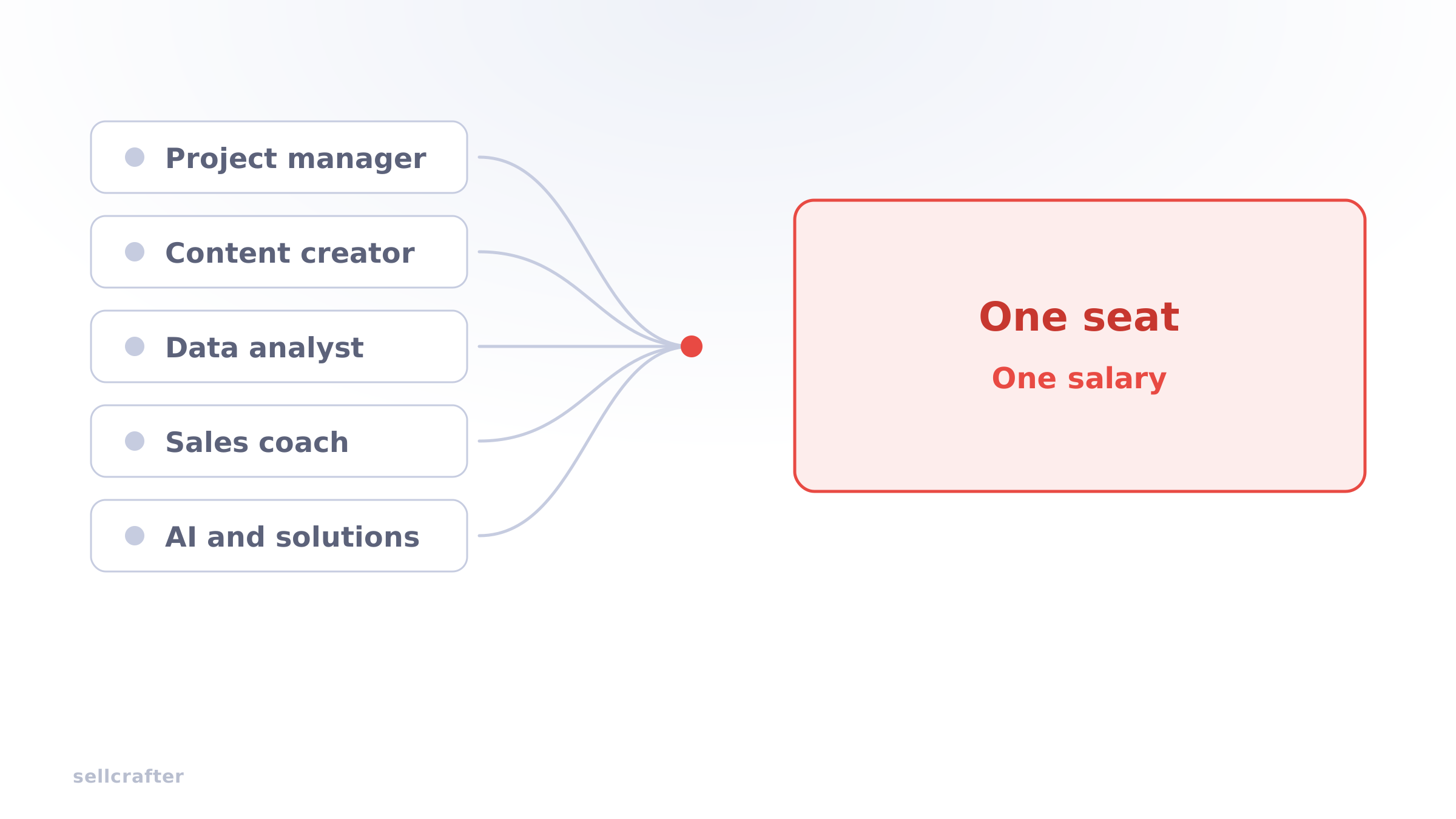
Nobody is a ten out of ten on all five. So companies hire someone strong on two and assume the other three come with the badge.
They do not. The brilliant content creator often cannot coach a call, and the natural coach often cannot build the system that scales their coaching past their own calendar.
The result is a hire who is busy, likeable, well-reviewed, and eighteen months in, your reps still sell five different ways.
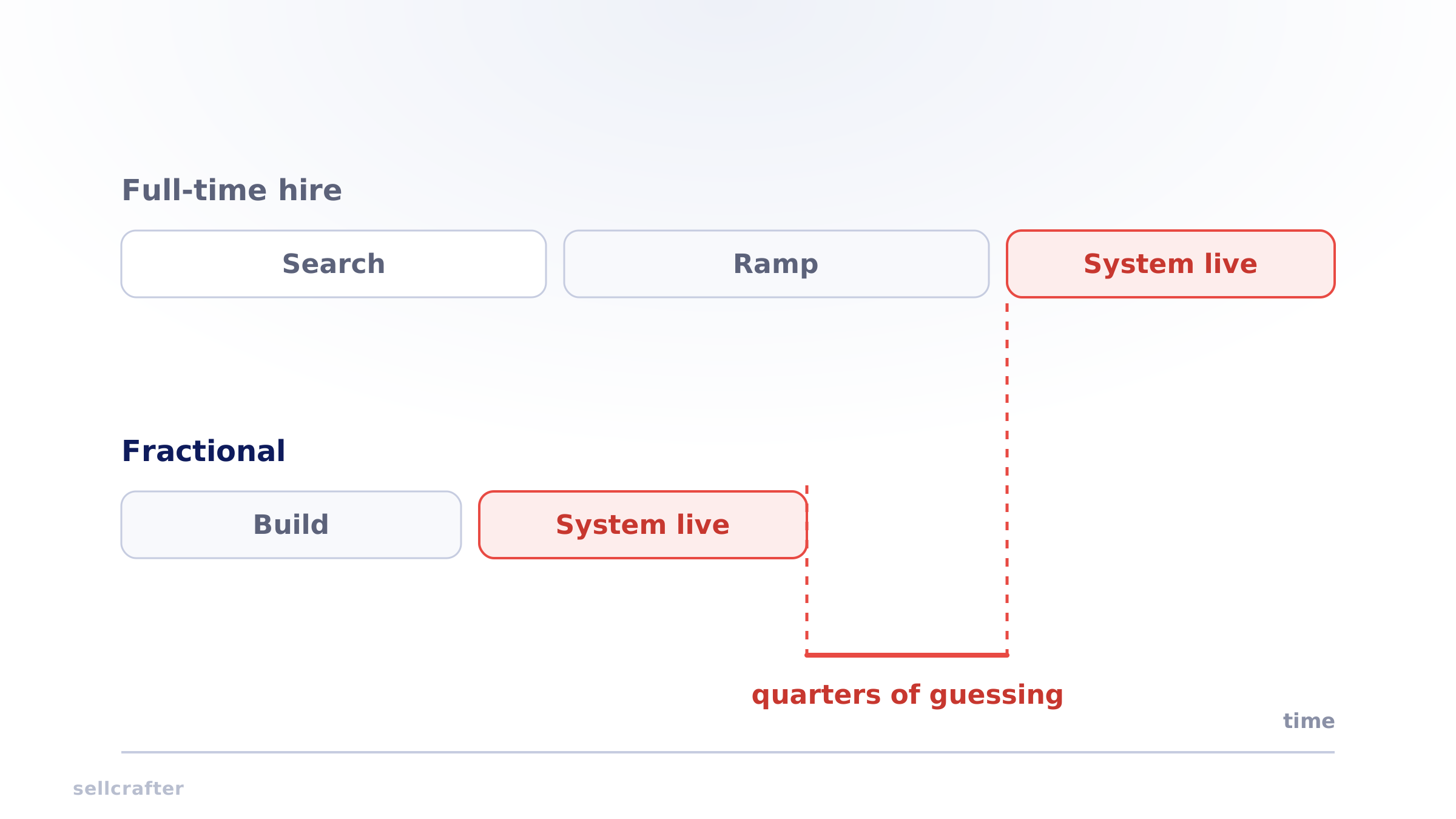
Then there is the math nobody runs. Add the search itself, often months for a role this specific, to the ramp of a first-time builder learning your market while designing your system from zero.
Your team spent that entire stretch guessing, and the pipeline carries the cost whether or not it shows up on a budget line.
When fractional beats the full-time hire
The decision comes down to your situation, and there are three where fractional wins clearly.
While you search for the right person. The search for a genuine five-of-five operator takes months, and pausing enablement until it closes means new reps ramping on tribal knowledge the whole time.
A fractional operator builds the playbook, the onboarding path, and the coaching cadence during the search. Your eventual hire walks into a working system and spends their first quarter running and improving it instead of staring at a blank workspace.
You also interview candidates better, because you now know precisely what the job contains.
Before you commit to the permanent seat. The build phase is heavy, but the maintenance phase often is not, and committing a permanent salary before you know which phase you are buying is a guess.
A fractional engagement gives you the full build without the commitment, and if the workload proves the seat is needed, you make that case from evidence.
When the founder or VP Sales is the enablement function. Common in growing teams: the leader who should be inspecting deals is instead writing onboarding docs at 11pm. Fractional takes the build off their plate and returns them to the job only they can do.
When it does not
Honesty section.
If your motion changes constantly, product shipping monthly, messaging moving with it, new cohorts of reps onboarding back to back, then enablement is a daily operating job and a part-time operator becomes your bottleneck.
Hire full-time, and hire someone who has built the system before somewhere else, so you are not funding a learning curve on your payroll.
Fractional also fails when leadership treats it as outsourcing adoption. An outside operator can build the standard and coach your managers to run it. Only your managers can make reps live it.
If your frontline managers will not inspect calls against the playbook, no staffing model saves you.
How to inspect a fractional engagement
This is where leaders get taken, so inspect it like you would inspect a deal.
Before signing. Ask what changes in your reps’ observable behavior by day 90, and where you will see it: which calls, which CRM fields, which deal reviews.
An operator who answers in deliverables (“a 60-page playbook, 12 training modules”) is selling documents.
Ask what they need from your managers each week. “Nothing, I handle it” is a red flag, because a system built without your managers dies the day the contract ends.
And ask what the handover looks like, because the entire point is that someone on your payroll runs this after they leave.
During the engagement. Pull three recent discovery calls monthly and check them against the documented standard.
Watch whether your managers can run the coaching cadence without the consultant in the room by the halfway mark.
Check that the playbook changed since last month, because a static playbook is already a dead one.
And check pipeline hygiene: next steps booked on calls rather than promised in follow-up emails, stages meaning the same thing across reps.
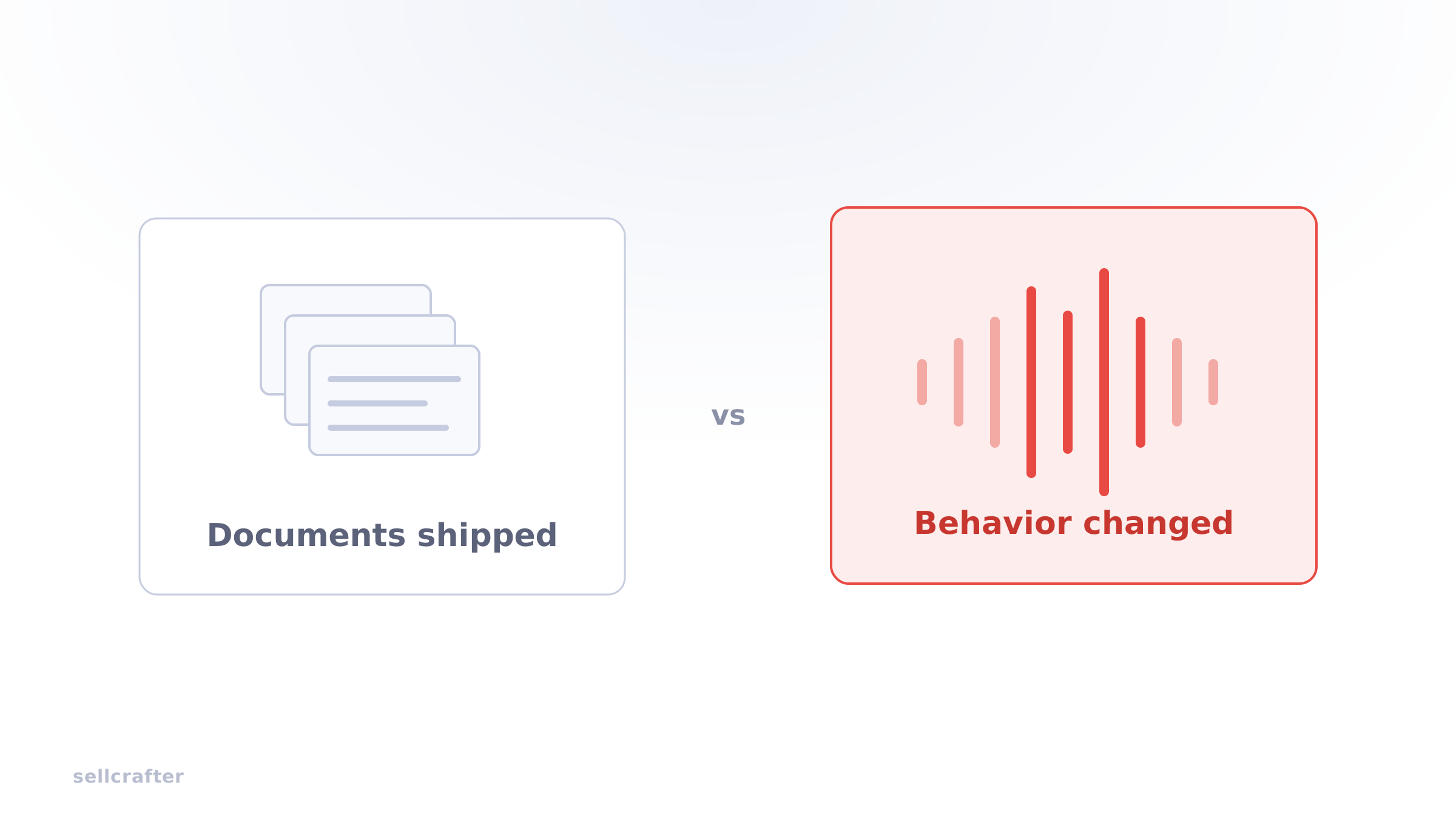
Red flags at any point. Content volume presented as progress. Sessions your reps rate highly but that change nothing in the next week’s calls. A source of truth living in the consultant’s own tooling instead of yours.
Any answer to “how do we know it’s working” that does not involve listening to your team sell.
The decision
Leaving enablement unowned has a price: every rep invents their own way to sell, ramp times stretch, and your forecast is a mood.
The decision in front of you is smaller than it looks. You are choosing who builds the system first, not whether to have one.
If you have the volume and the budget for the full-time seat, hire it, and hire experience. If you are still searching, still deciding, or still under pressure to get the system live, fractional gets it done in weeks while you do.
I’m Carla. I build sales enablement systems for B2B SaaS teams, coach the managers to run them, and hand them off. If you are not ready to talk yet, the sales enablement cookbook walks through the pieces yourself.
If you are where this article describes, book a call and we will work out what you actually need.
FAQ
What is the difference between a sales enablement consultant and a fractional sales enablement manager? Mostly framing. A consultant usually implies a scoped project with an end date, fractional implies ongoing part-time ownership. The structural question matters more than the title: is the engagement measured in deliverables shipped or in rep behavior changed?
How much does fractional sales enablement cost? Models vary: monthly retainers, fixed-scope builds, day rates. Rather than anchoring on a number, compare against the full alternative: full-time salary plus months of search plus the ramp of a first-time builder, against a fixed engagement from someone who has installed the system before. Then price the option you are actually choosing today, which is often “nobody owns this,” and count what that costs in ramp time and lost deals.
Can a fractional person really coach my reps? They can build the coaching system and train your managers to run it: the cadence, the call review structure, what good looks like at each stage. Long-term coaching belongs to your managers. Any outside operator claiming to be your team’s permanent coach is building dependence, and dependence is the opposite of enablement.
Should a startup hire sales enablement in-house or use a freelancer? If the system does not exist yet, the build is what you need and fractional almost always wins. Once the maintenance load is a daily job, constant product change, continuous hiring, multiple motions to keep aligned, the seat justifies itself. In between, let the evidence from a fractional engagement make the decision for you.
What should the handover to a full-time hire include? The playbook in your own tools, the onboarding path with owners assigned, the coaching cadence your managers already run without help, and a working session where the operator walks your new hire through why the system is built the way it is. If the handover is a folder of files, the engagement failed at the finish line.
Written by
Carla Macciocu
Sales enablement consultant working with B2B SaaS teams from Seed to Series C. Runs Pimp My Playbook out of Sellcrafter.